Root development
Supports the development of an active root system and a larger contact area between root and growing environment.
Microbiology
BIOMICROBES brings selected live microorganisms to the environment where crop development begins: the root zone. Our microbial formulations support root development, nutrient use efficiency and biological activity around the roots within professional growing programs for soil, substrate and hydroponic cultivation.
Microbial biostimulants
Microbial biostimulants are formulations containing selected live microorganisms.
In the root zone they support natural biological processes related to root development, nutrient availability and use efficiency, and the crop’s response to changing growing conditions.
Properties differ by microorganism and by formulation. What matters is therefore not simply the presence of bacteria, but which microorganisms are applied, at what concentration and within which growing system.
The root zone
Immediately around the roots lies the rhizosphere: the zone where root exudates, microorganisms, water, oxygen and nutrients interact continuously.
Roots release compounds that influence microbial activity around the plant. At the same time, microorganisms respond to conditions such as moisture, temperature, oxygen, pH and available nutrients. An active rhizosphere therefore supports the biological basis for root and crop development.
The immediate zone around the plant root where the plant, microorganisms, water and available nutrients influence one another.
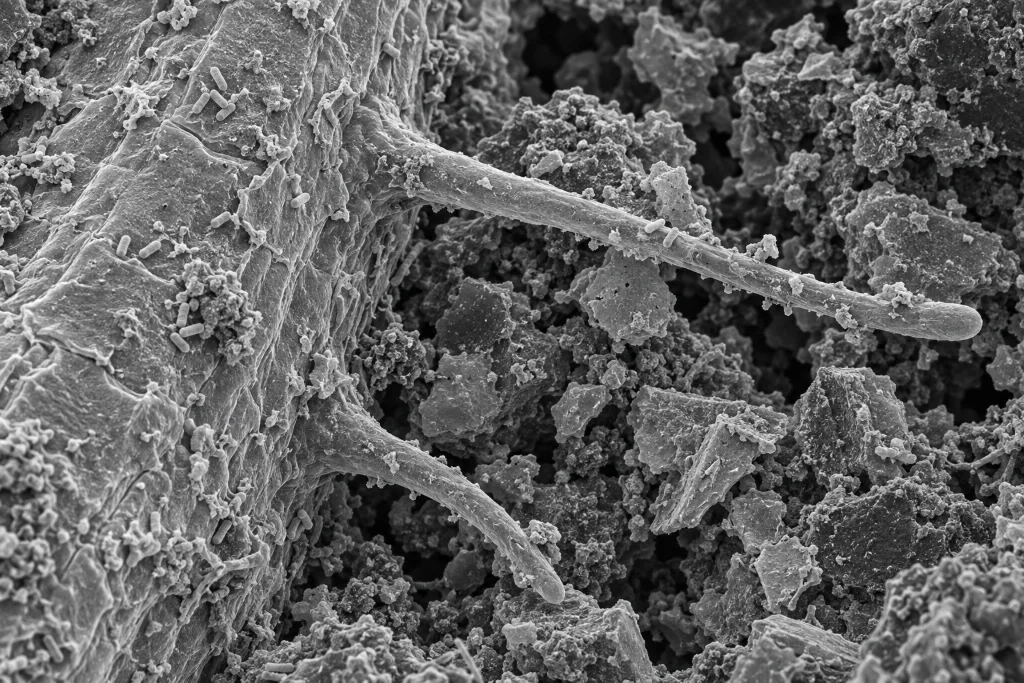
From microbiology to crop performance
Selected microorganisms can fulfill different functions within the root zone. The eventual contribution relates to the microorganism, the formulation, the application and the conditions in the growing system.
Supports the development of an active root system and a larger contact area between root and growing environment.
Supports microbial processes that can make nutrients in the root zone more available and easier to use.
Contributes to an active microbial environment around the roots, as part of a broader professional growing program.
A vital crop with an active root zone is better equipped for changing growing conditions and develops more evenly.
The growing system
A microbial formulation does not work in isolation. The crop, the root zone, the growing medium, water quality, application timing and other inputs together determine how microorganisms can establish and function.
That is why BIOMICROBES looks beyond the product itself and considers how it is applied within the existing growing program.
Our microbial solutions
BM08, BM02, ROOT-N en HYDROPONICS each contain different microbial compositions. Every product therefore holds its own position within the BIOMICROBES portfolio and matches a specific application or growing environment.
 BIOMICROBES 08Broadly applicable Bacillus consortium supporting root development, nutrient use efficiency and crop resilience in intensive growing systems.View BIOMICROBES 08
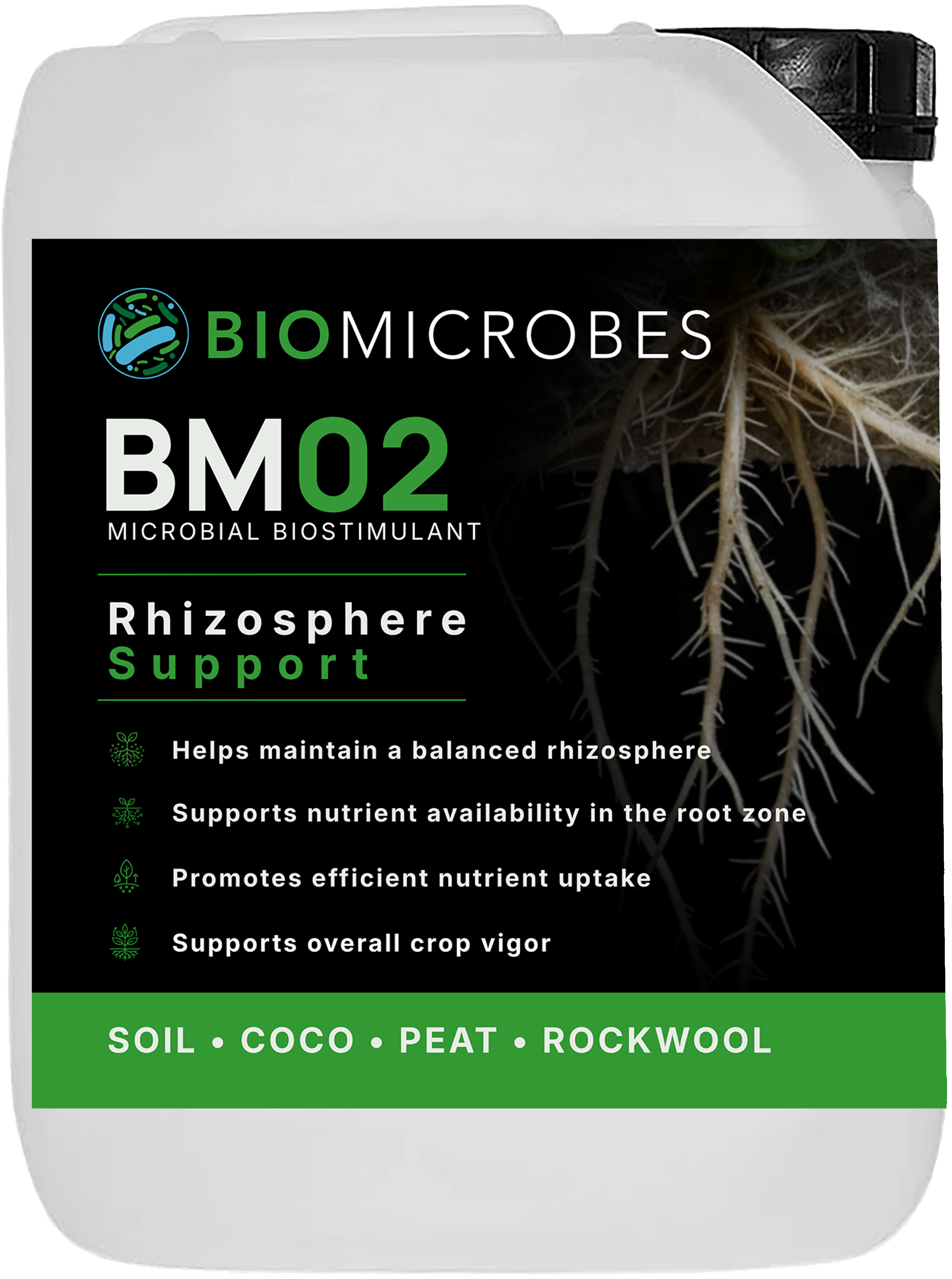 BIOMICROBES 02Formulation based on Pseudomonas fluorescens, focused on phosphate mobilization and iron-related processes in the rhizosphere.View BIOMICROBES 02
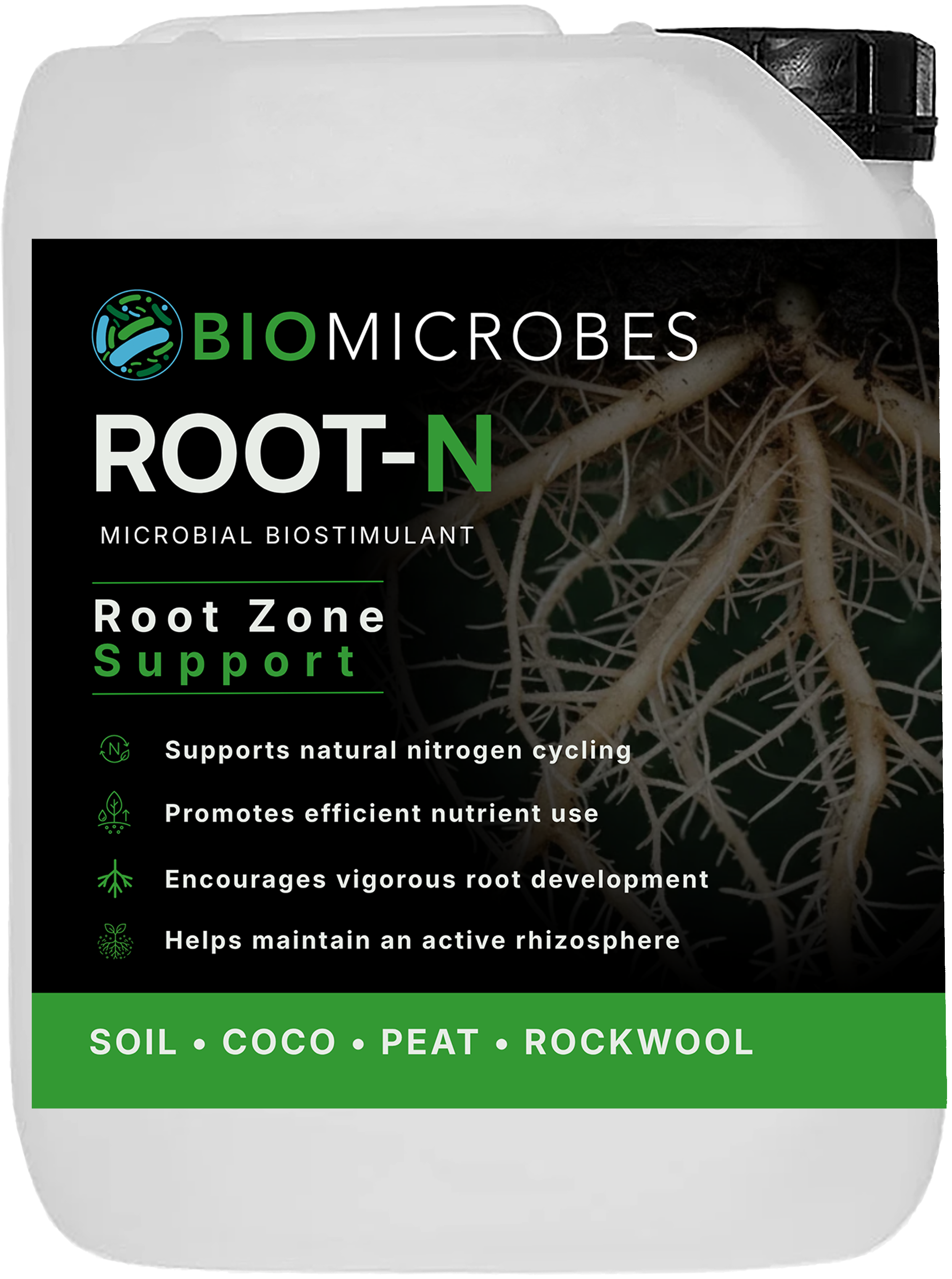 ROOT-NFormulation based on Azotobacter vinelandii, developed to support nitrogen-related processes and efficient use of available nitrogen.View Root-N
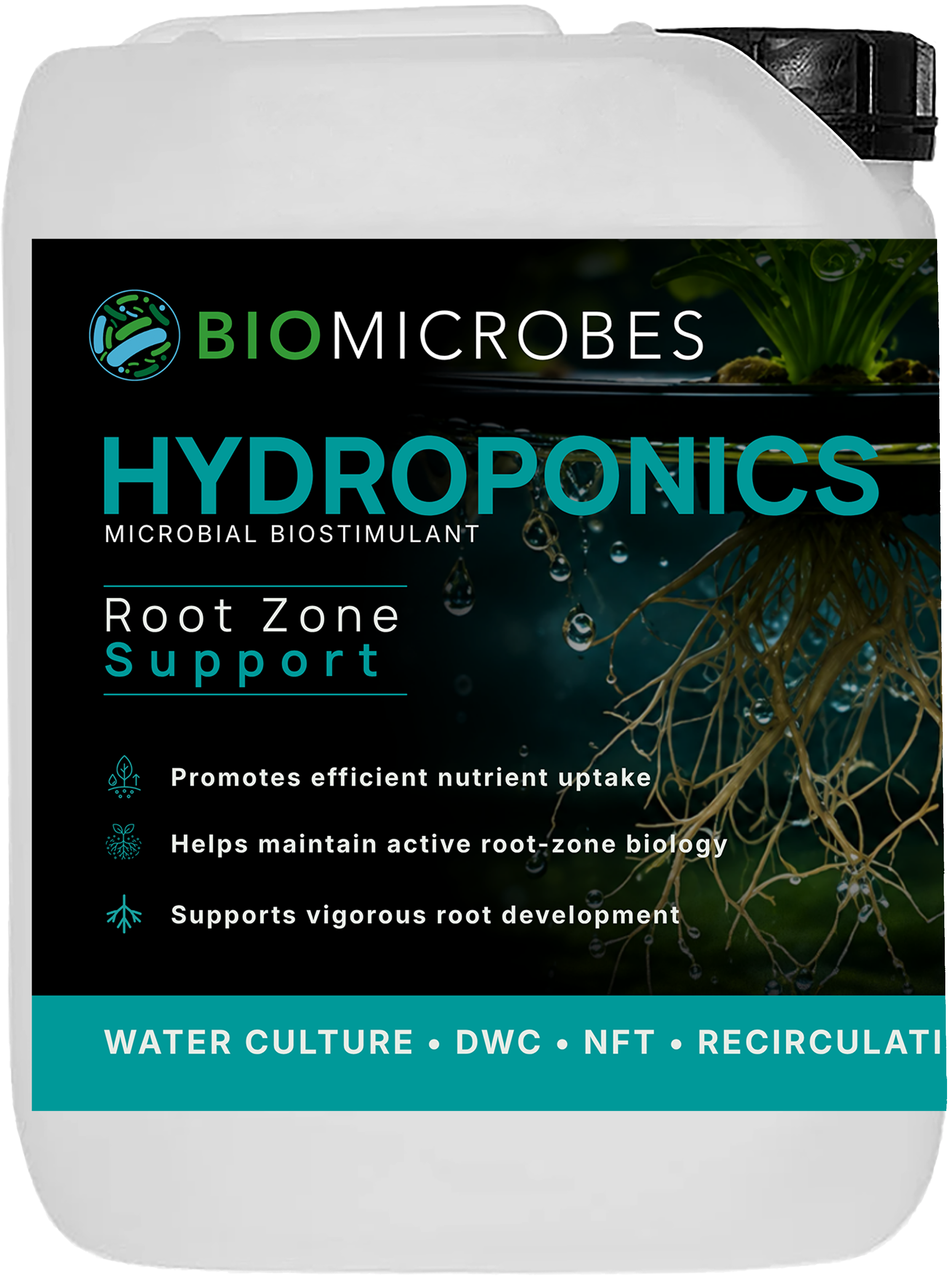 HYDROPONICSMicrobial formulation supporting the root zone in hydroponic cultivation and recirculating growing systems.View Hydroponics
Why BIOMICROBES
BIOMICROBES develops microbial formulations for practical use within professional growing systems. From product development and formulation to batch control and application guidance, quality and reproducibility come first.
Practical questions
What the selected microorganisms support and why BIOMICROBES offers different products.
The presence of many microorganisms says nothing yet about which functions they perform under your growing conditions. With an inoculant, you introduce selected microorganisms at a chosen moment. Whether they persist and add something depends partly on the existing community, the crop and the environment. The aim is therefore a targeted addition; an existing soil community does not need to be removed first.
No. Pseudomonas fluorescens, for example, forms siderophores that bind iron, Azotobacter vinelandii can fix atmospheric nitrogen as a free-living bacterium, and various Bacillus species are known for their role in nutrient processes and around the root. At the same time, different organisms can partly contribute to the same processes. A good choice therefore starts with the functions you want to support.
The zone directly around the root is called the rhizosphere. Roots release sugars, amino acids and organic acids there, which microorganisms use as a food source. This creates an active interaction between plant, microorganisms and nutrients that plays a major role in how the root zone functions.