Nitrogen cycle · Active root zone
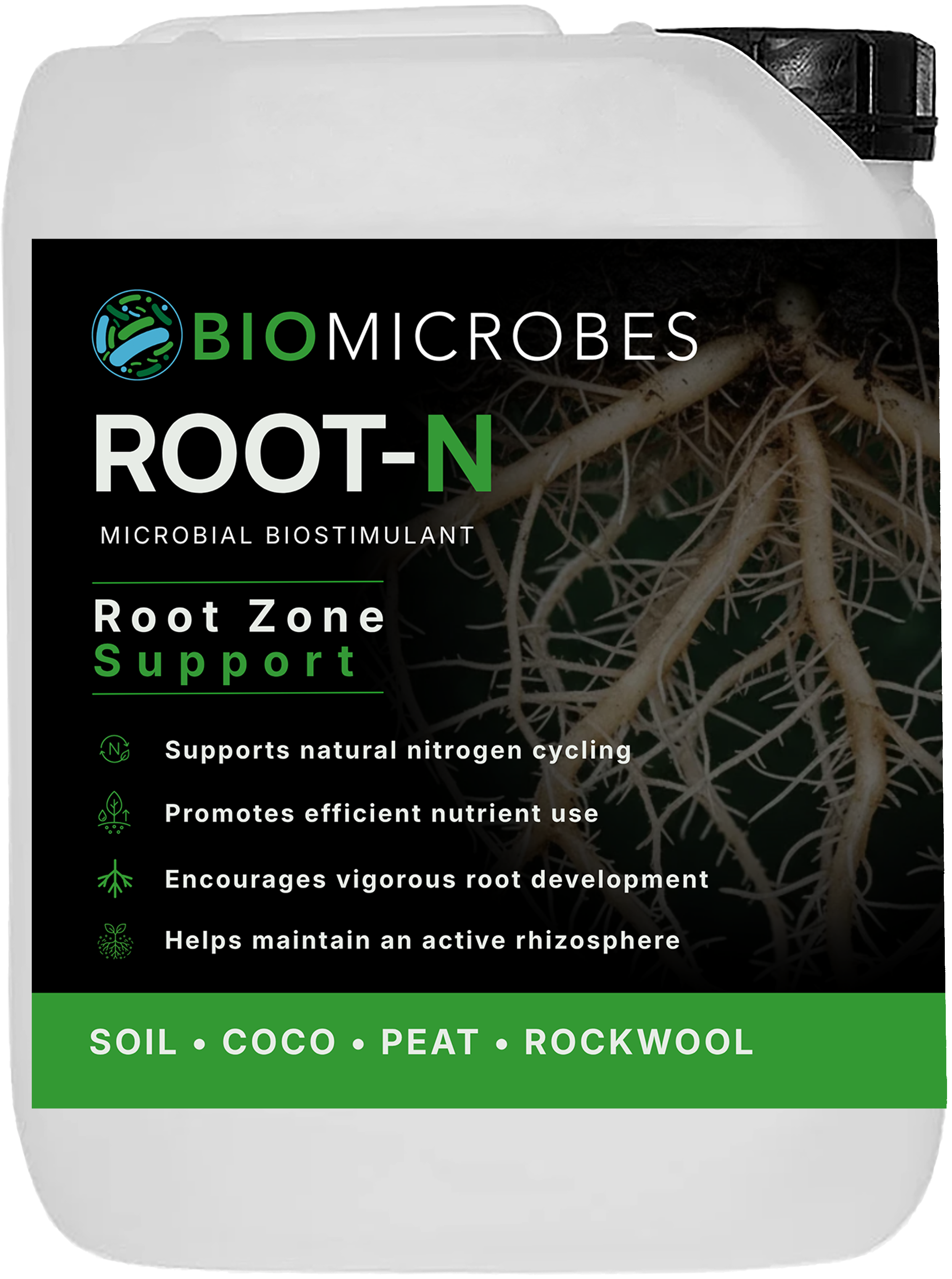
ROOT‑NSupports the natural nitrogen cycle around the root
ROOT-N delivers Azotobacter vinelandii straight into the root environment. This free-living bacterium is selected to support rhizosphere activity, nutrient use and root development.
Why this microbiology?
Nitrogen does not start in the fertiliser tank alone
Azotobacter vinelandii is a soil bacterium that plays a role in the natural nitrogen cycle. ROOT-N brings it straight to where roots and micro-organisms meet, as a biological complement to your fertilization program.
Biological nitrogen fixation
Azotobacter vinelandii can fix atmospheric nitrogen and so plays a specific role in the nitrogen cycle around the root, as a biological complement to your fertilization.
Free-living strength
The bacterium lives independently in the soil and does not depend on root nodules, so ROOT-N fits a wide range of professional soil and substrate crops.
Active around the root
Thanks to its motility and its ability to attach to root surfaces, Azotobacter vinelandii actively takes up position in the rhizosphere.
Broad metabolic profile
In addition, Azotobacter vinelandii releases natural metabolites into the root environment and contributes to an active microbial base and root development.
ROLE WITHIN THE MICROBIAL APPROACH
A complementary functional layer
Microorganisms do not work in isolation in the root zone. This is how this microbiology fits within a broader microbial approach.
- Composition
- Targeted: one selected organism, Azotobacter vinelandii.
- Distinctive role
- Adds a specific function, biological nitrogen fixation, that many other microorganisms do not have.
- Within a broader approach
- That function sits alongside other microbial functions in the root zone, not in place of them. ROOT-N shows how microbiology consists of several functional layers.
Application
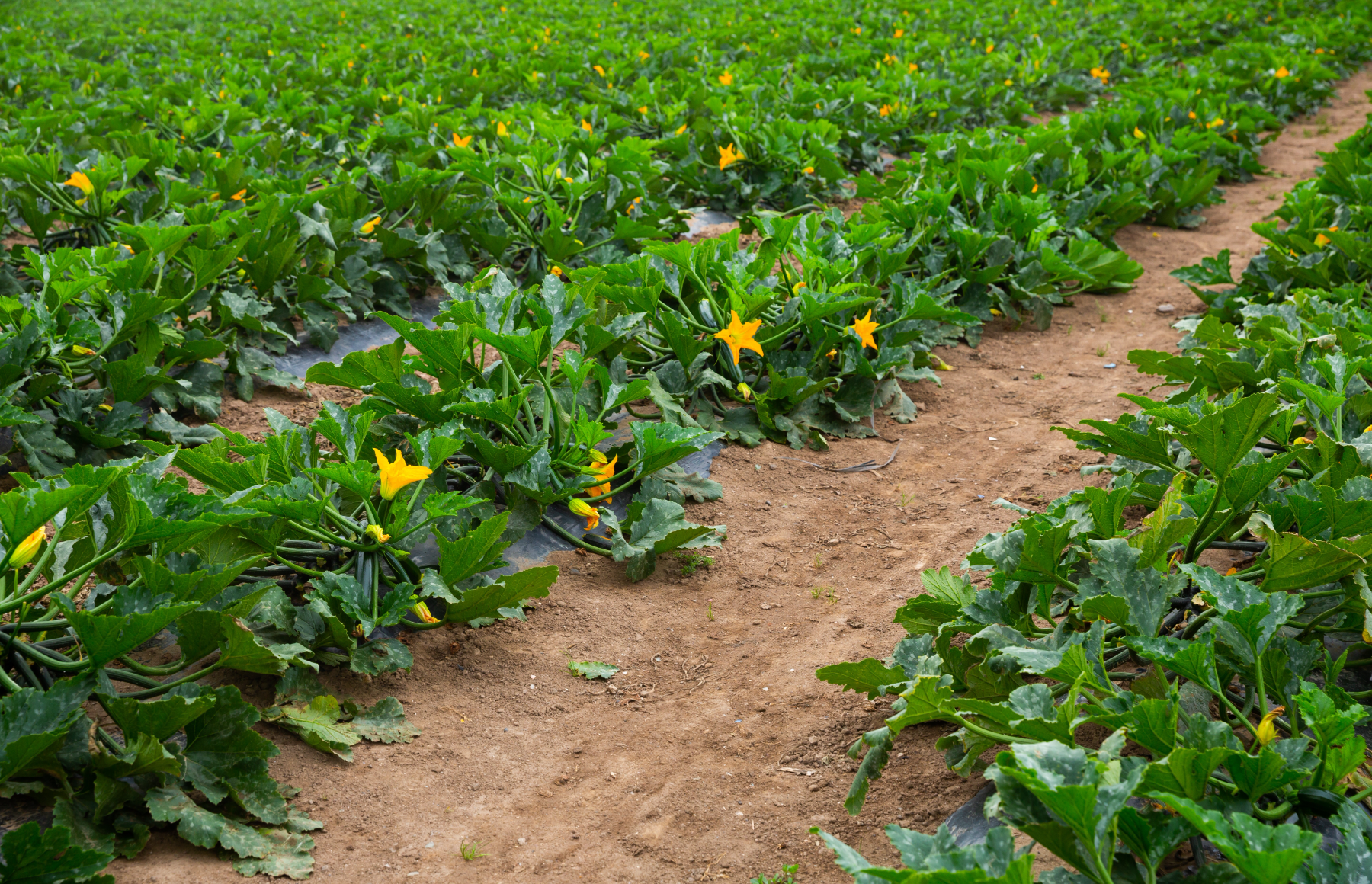
ROOT-N is applied around the root zone: as a drench at planting and through drip irrigation during the crop cycle.
| Application timing | Dose |
|---|---|
| At the start | 8 L/ha3.24 L/acre109 US fl oz/acre |
| After 2 weeks | 4 L/ha1.62 L/acre54.7 US fl oz/acre |
| Monthly | 4 L/ha1.62 L/acre54.7 US fl oz/acre |
- Shake well before use.
- Apply through the root zone: drench at planting and drip irrigation.
- Ensure sufficient irrigation volume so the product reaches the root zone.
- Do not mix with fungicides or pesticides.
- Check miscibility and application guidelines before combined use.
Apply the product at the dose and frequency stated on the current product label. Match its use to the crop, water quality, substrate and the design of the growing system.
Specifications
These values come from the current product label. Doses, pack sizes and regional documentation can differ per market; always follow the label for your market.
Product documentation
Request the current product label for your region or consult the available certification documents.
Request product label Request technical adviceBuild further
Give every microbial function its place
ROOT-N can be used on its own. To widen microbial diversity around the root, the programme can be extended with BIOMICROBES 02 or BIOMICROBES 08.
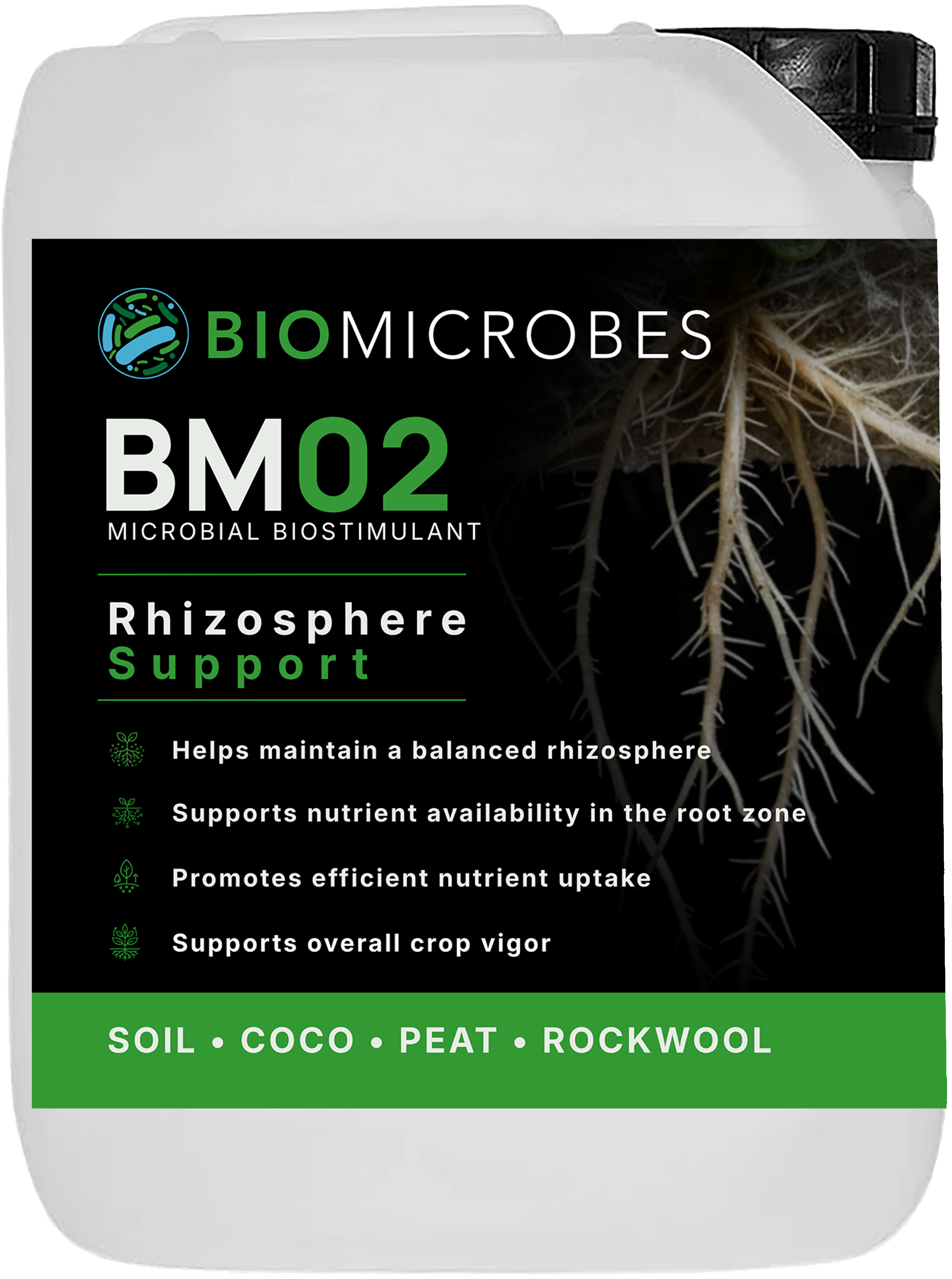 BIOMICROBES 02
Pseudomonas · biostimulant
Microbial formulation based on Pseudomonas fluorescens.
Read more →
BIOMICROBES 02
Pseudomonas · biostimulant
Microbial formulation based on Pseudomonas fluorescens.
Read more →
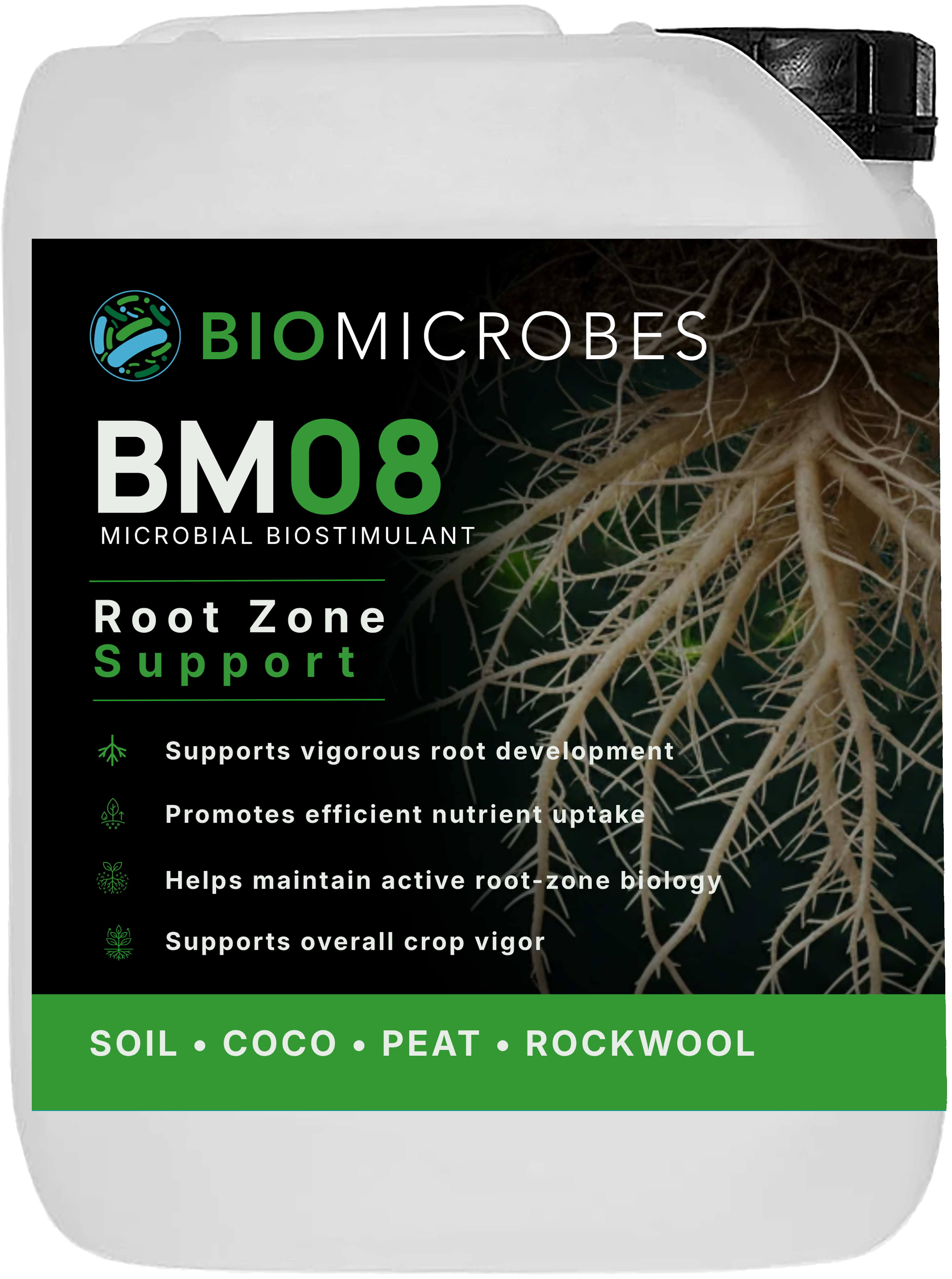 BIOMICROBES 08
Consortium · 8 bacteria
Microbial consortium of eight bacteria for the root zone.
Read more →
BIOMICROBES 08
Consortium · 8 bacteria
Microbial consortium of eight bacteria for the root zone.
Read more →
Use within one crop programme does not automatically mean products can be mixed in the same tank. Ask for advice on the right use.
Frequently asked questions
Frequently asked questions about ROOT-N
How much nitrogen fertilizer can I save with ROOT-N?
The ROOT-N label states support for the natural nitrogen cycle, but gives no guaranteed amount of nitrogen supplied or percentage of fertilizer savings. The presence of Azotobacter vinelandii cannot be converted directly into kilograms of nitrogen per hectare. Assess a change in fertilization with a trial in which both the product and the nitrogen rate are compared separately, and monitor yield and crop quality.
Does Azotobacter work the same way as the nodule bacteria in legumes?
Azotobacter vinelandii is known as a free-living nitrogen fixer. That is a different way of life from the specific partnership of rhizobia with legumes in root nodules. Results or nitrogen contributions from a nodule bacterium must therefore not be adopted for ROOT-N. With Azotobacter, too, nitrogen fixation and the possible contribution to the crop depend on the environment; the species name alone does not tell you how much nitrogen the plant receives.
More on water and application