ARTICLE · MICROBIAL BIOSTIMULANTS

Microbial biostimulants: putting selected microorganisms to work

7 min read

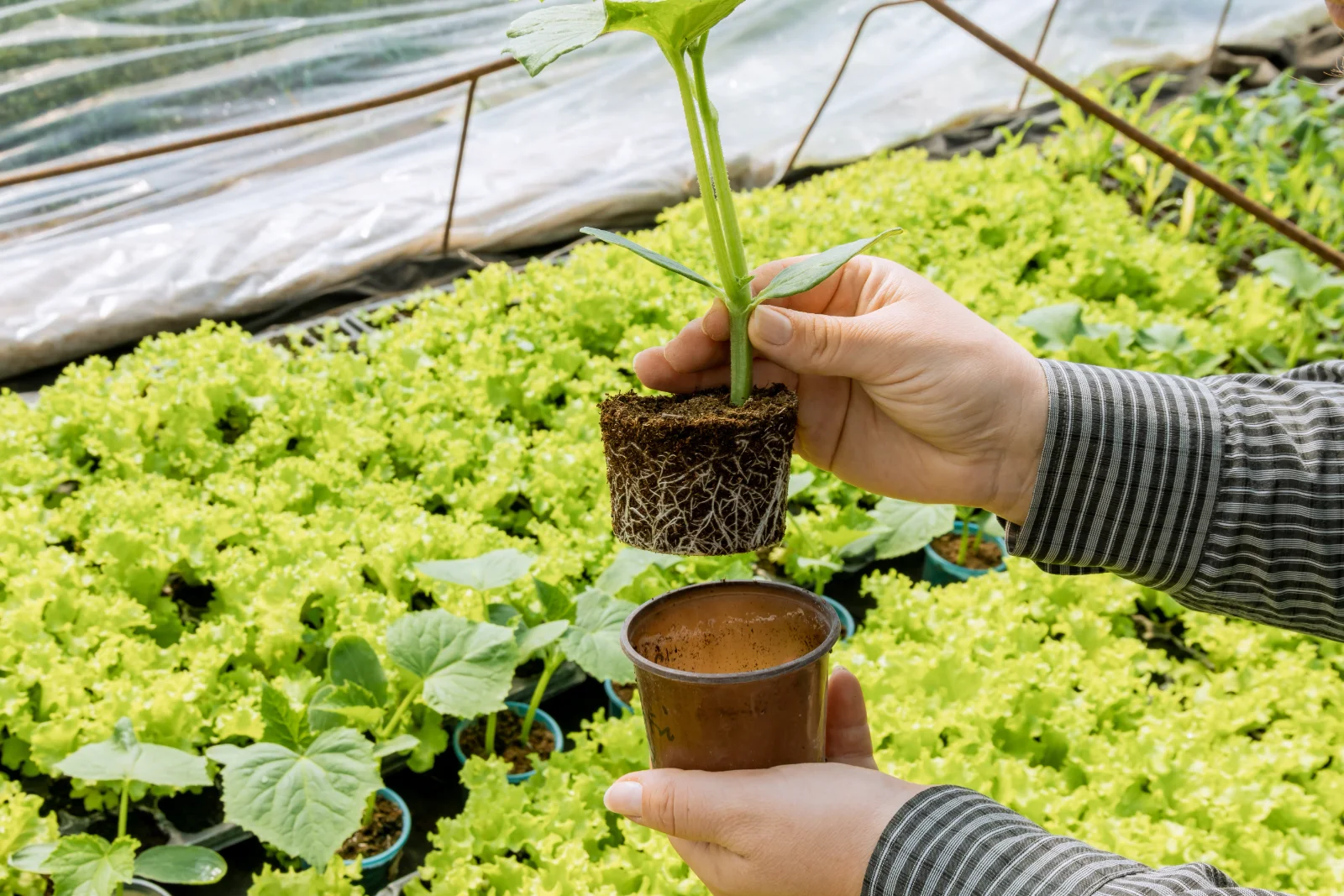
Hand holding a young plant with a well-rooted root ball above its pot in a greenhouse

A handful of soil, a substrate slab, a young plant and even irrigation water all contain microorganisms. But their presence doesn’t automatically mean that microorganisms with the right properties are there at the right time and in the right place.

That is where a purpose-built microbial product adds value. Instead of leaving root zone microbiology entirely to chance, selected strains are deliberately added to the growing system. Not as a miracle cure, but as a technical part of the crop program.

To use these products well, it helps to understand what microbial biostimulants are, why strains and formulations differ, and which conditions determine whether microorganisms can do their job in the root zone.

Microbes being present is not yet a targeted microbial strategy

Around every root, a dynamic community of bacteria, fungi and other microorganisms develops. The plant shapes that environment through root exudates. At the same time, water, oxygen, pH, temperature, nutrition and the growing medium determine which organisms can hold their own.

Even in new substrate, a crop doesn’t necessarily start from zero microbiologically. Microorganisms can arrive with the young plant, the propagation plug, irrigation water, the substrate, storage and day-to-day work in the greenhouse or on the farm.

But “there are microorganisms in it” is not the same as “the right microorganisms are present”. The community that forms spontaneously has not been selected for any intended function in your crop or growing system. Numbers and activity can also vary widely.

With a targeted microbial product, you choose identified strains that have been deliberately selected and are supplied in a controlled formulation. That gives microbiology a fixed place in the crop program, alongside nutrition, water management and root zone steering.

What is a microbial biostimulant?

Under EU regulations (opens in a new tab), a plant biostimulant is a product that stimulates plant nutrition processes independently of the nutrients the product itself supplies. The intended effects relate to nutrient use efficiency, tolerance to abiotic stress, quality traits, or the availability of confined nutrients in the soil or rhizosphere.

A microbial biostimulant uses microorganisms to support these processes. In practice, broader terms are also used, such as microbial product, microbial solution or inoculant. Which official product category and which claims apply depends on the composition, registration and market.

That distinction matters. A microbial product is not automatically:

  • a fertilizer that directly corrects a nutrient deficiency;
  • a crop protection product against diseases or pests;
  • a replacement for a good nutrition and irrigation program;
  • a universal solution that gives the same result in every crop and every system.

The product adds selected, living microorganisms. What those microorganisms can then do depends on their properties and on the environment they end up in.

It’s not just the species, it’s the strain

Labels and trade articles often mention names such as Bacillus, Azospirillum, Rhizobium or mycorrhizal fungi. But a species or genus name doesn’t tell the whole story. BIOMICROBES 08 is our microbial solution based on carefully selected Bacillus strains.

Within the same species, strains can differ in properties, activity and suitability for a given use. That is why knowledge about one studied strain should not simply be taken as proof for every product containing a related bacterium.

For a professional microbial product, the following matter:

  1. Identity: which strains does the product contain exactly?
  2. Selection: on the basis of which properties were these strains chosen?
  3. Viability: are enough living microorganisms present at the time of application?
  4. Formulation: do the strains remain stable during production, storage and use?
  5. Application: does the chosen method actually get them to the intended zone?
  6. Compatibility: do they fit with water treatment, fertilizers and other inputs in the program?

A long list of different species is therefore not automatically better than a smaller, purpose-built product. The quality of selection, formulation and application matters at least as much as the number of names on the label.
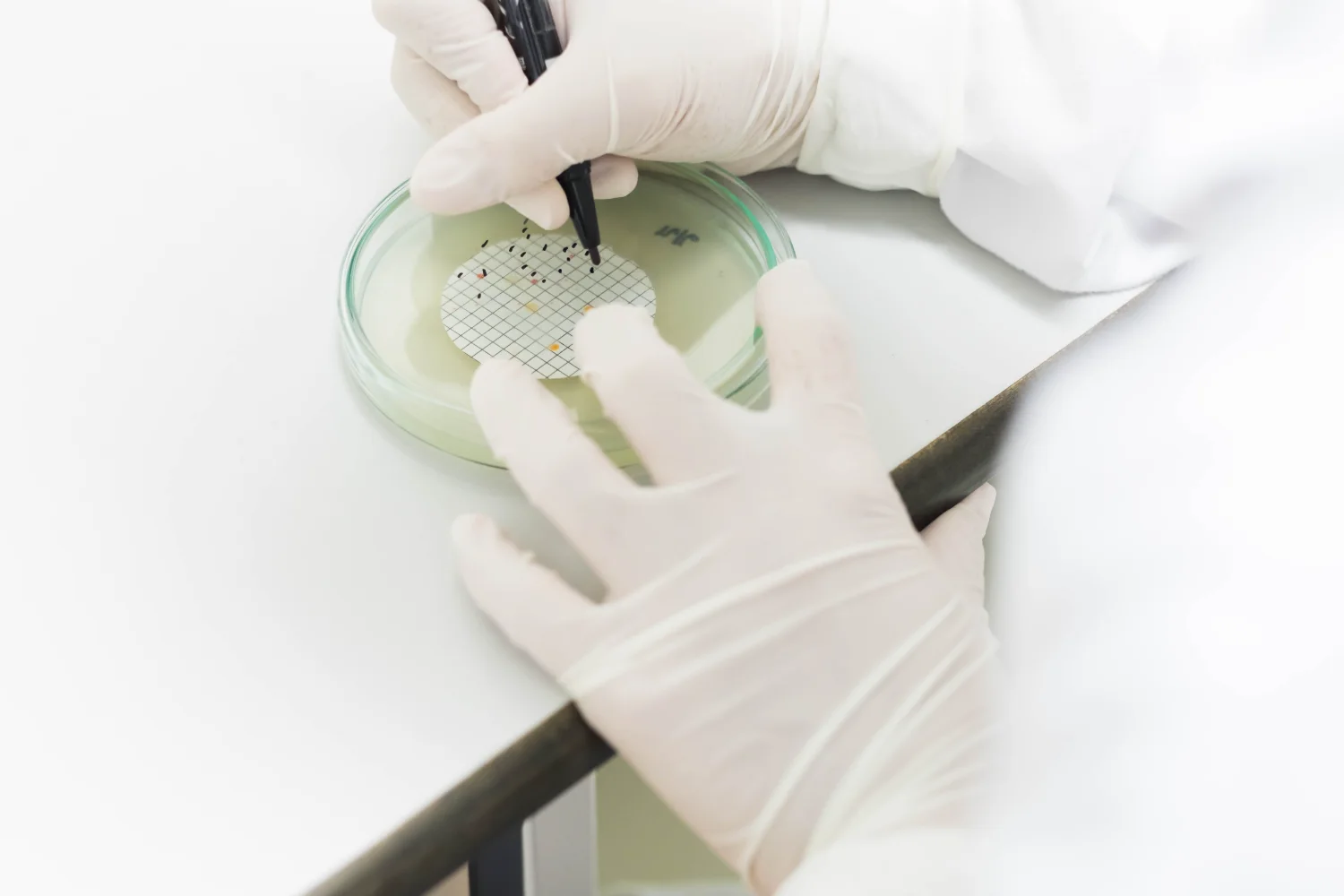
Gloved hands marking colonies on a membrane filter in a Petri dish

What can selected microorganisms mean in the root zone?

Microorganisms can be involved in processes around the root in different ways. Some strains produce compounds that influence their interaction with the plant. Others may be involved in the availability or conversion of certain nutrients. Still other strains are studied for their role under abiotic stress conditions (opens in a new tab).

That doesn’t translate into automatic product results, however. A property shown under controlled research conditions still has to fit, for a commercial product:

  • the strain used;
  • the formulation and concentration;
  • the crop and growth stage;
  • soil, substrate or hydroponic system;
  • pH, temperature, moisture and oxygen;
  • nutrition and water quality;
  • timing and application method.

Research on so-called bio-effectors (opens in a new tab) shows why this context matters. Average effects can be positive, while results vary between crops, locations, soils and conditions.

That doesn’t make microbial products less valuable. It means that a targeted product choice and a technically sound application are essential.

Microbiology and good growing practice go hand in hand

A microbial product doesn’t work in isolation from the rest of the growing system. Roots and microorganisms respond to the same environment. A root zone that is too wet, low in oxygen or unstable remains a poor starting point, even when microorganisms are added.

Conversely, good growing conditions don’t make a microbial application unnecessary. They actually give selected strains a better starting position. Think of:

  • even irrigation;
  • enough oxygen in the root zone;
  • suitable pH and EC;
  • a nutrition program matched to the crop and growth stage;
  • careful use of disinfectants and oxidizers;
  • an application moment at which the microorganisms can reach the root environment.

So the right approach is not choosing between growing practice or microbiology. The strength lies in the combination.


Soil, substrate and hydroponics call for different approaches

Professional agriculture and horticulture cover a wide range of growing systems. An application in soil-grown crops behaves differently from one in coir, peat, stone wool or a recirculating hydroponic system.

Aerial view of a water reservoir, a corn field and a greenhouse side by side

Soil-grown crops

Soil already contains a large and diverse microbial community. Soil type, organic matter, previous crop, fertilization, moisture and temperature all shape the starting situation. An added microorganism therefore enters a complex ecosystem. Read more about open-field growing.

That doesn’t mean a targeted application has no value. It does mean that product choice, timing and application must suit the conditions in that soil and the crop being grown.

Greenhouse and substrate

In substrate cultivation, the root zone is smaller and more tightly controlled. Irrigation, drain, pH, EC and oxygen can change quickly. That creates opportunities for a targeted application, but also calls for good knowledge of the irrigation system and the treatments in use. Read more about greenhouse and substrate cultivation.

Because the grower can influence many conditions in the root zone, microbial support can be deliberately built into the overall crop program here.

Hydroponics

In hydroponic and other recirculating systems, microorganisms can spread through the system. Water microbiology, water treatment, temperature, oxygen and residence time are therefore important. A product must fit both the crop and the technical water line.

A microbial product that isn’t compatible with the disinfection method in use, or is applied at the wrong moment, may not get the conditions it needs to reach the root zone alive.

There is no general application schedule that works the same way for soil, substrate and hydroponics.

Turning a microbial product into a professional program

Grower examining the root system of a soybean plant in the field

1. Start with a clear goal

Decide why you want to add microbiology and which part of the crop you want to support. A clear goal makes a targeted product choice possible and avoids stacking applications without coherence.

2. Choose by strain and product specification

Look beyond general species names. Check which strains the product contains and what product information is available. Also consider shelf life, storage conditions, permitted claims and application options for your market.

A product with many different names on the label is not automatically better. The choice should revolve around how suitable the selected strains are for the goal and the growing system.

3. Map the water line and tank-mix partners

Disinfectants, oxidizing treatments and other products can affect the viability of microorganisms. So check the full route from mixing tank through the lines to the root zone.

Look not only at what is applied at the same time, but also at treatments used earlier or later in the irrigation system.

4. Apply according to current product-specific advice

Rate and frequency belong to the product, its registration, the crop and the system. So don’t copy a general schedule from an article.

Use the current label and the product-specific guidelines. When in doubt, align the application with a technical advisor who understands the crop, the growing medium and the irrigation system.

5. Follow development in practice

Record application moments and growing conditions. Don’t judge on a single white root or one measurement, but look at development over a longer period.

Where possible, use a comparison and combine visual observations with relevant crop data, such as root development, crop uniformity, irrigation, drain, EC, pH and root zone temperature.

That gives a clearer picture of the place the microbial product takes within the overall crop program.

Why combining is not automatically better

It is sometimes recommended to combine different types of microorganisms for the best result. That is too general. More strains or products don’t automatically mean better performance.

Microorganisms can complement each other, but they can also compete. Formulations, carriers and application timing can differ as well. A combination that sounds logical won’t necessarily work better in practice.

Only combine products when compatibility and joint use are sufficiently supported.

A targeted program with selected strains is more professional than combining as many microbial products as possible without a clear reason.

FROM PRODUCT TO PROGRAM

The role of BIOMICROBES

BIOMICROBES develops microbial solutions for professional agriculture and horticulture. We look not only at the microorganism in the package, but at the full environment in which it has to be applied.

Crop, root zone, substrate, irrigation water, fertigation and water treatment together determine which approach works in practice. That is why we combine selected microorganisms with technical advice on positioning and application.

The question is not whether microorganisms are already present in a growing system. They almost always are. The relevant question is whether you leave development entirely to chance, or deliberately use selected strains as part of your growing strategy.

Want to know which microbial solution fits your crop, root zone and irrigation system? Discuss your growing system with BIOMICROBES.

Sources and further reading

  1. European Union (2019). Regulation (EU) 2019/1009 on EU fertilising products, in particular PFC 6 on plant biostimulants.
    EUR-Lex: Regulation (EU) 2019/1009 (opens in a new tab)
  2. Rouphael, Y. & Colla, G. (2020). Biostimulants in Agriculture. Frontiers in Plant Science.
    https://doi.org/10.3389/fpls.2020.00040 (opens in a new tab)
  3. Hamid, B. et al. (2023). Physiological and molecular insight of microbial biostimulants for sustainable agriculture. Frontiers in Plant Science.
    https://doi.org/10.3389/fpls.2023.1041413 (opens in a new tab)
  4. Thonar, C. et al. (2024). Effectiveness of bio-effectors on maize, wheat and tomato performance and phosphorus acquisition from greenhouse to field scales in Europe and Israel: a meta-analysis. Frontiers in Plant Science.
    https://doi.org/10.3389/fpls.2024.1333249 (opens in a new tab)
  5. Aleklett, K., Rosa, D., Pickles, B.J. & Hart, M.M. (2022). Community Assembly and Stability in the Root Microbiota During Early Plant Development. Frontiers in Microbiology.
    https://doi.org/10.3389/fmicb.2022.826521 (opens in a new tab)