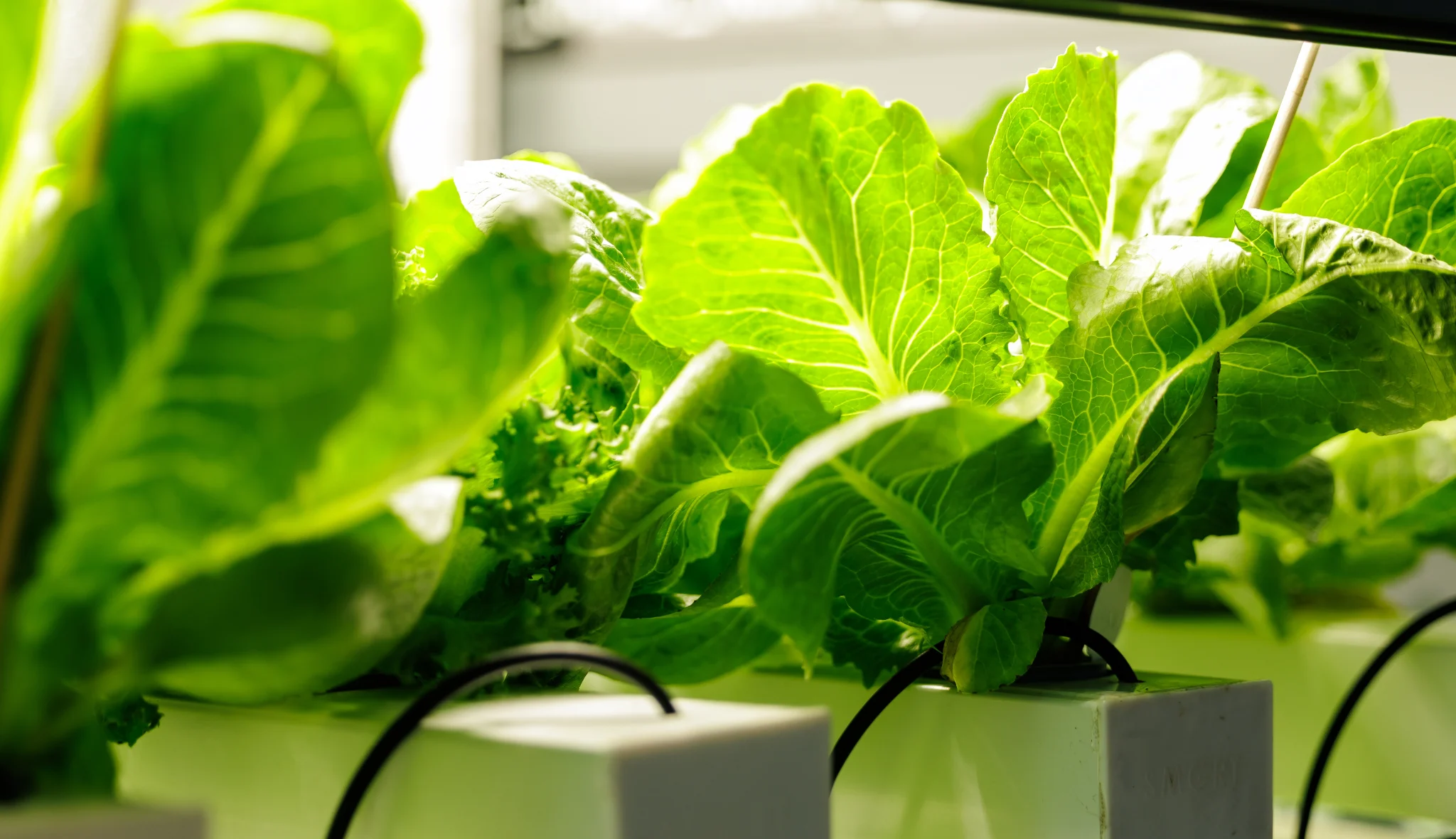
WATER-BASED GROWING
Microbiology in a water-based growing system
In water-based growing the roots develop directly in a flowing or recirculating nutrient solution. Water is not only a means of transport here: it forms the direct environment of the root.
A sound application therefore does not start with a single product, but with insight into the complete water route.
WATER AS THE ROOT ENVIRONMENT
In water-based growing the nutrient solution is the root zone
By water-based growing we mean systems in which plants grow without a solid substrate and the roots are in direct contact with the nutrient solution: flowing growing systems, floating cultivation and other water-driven systems.
The nutrient solution carries water, minerals, oxygen and applied microorganisms to the root. Where a substrate buffers part of the conditions, a change in one component works through the whole system quickly here.
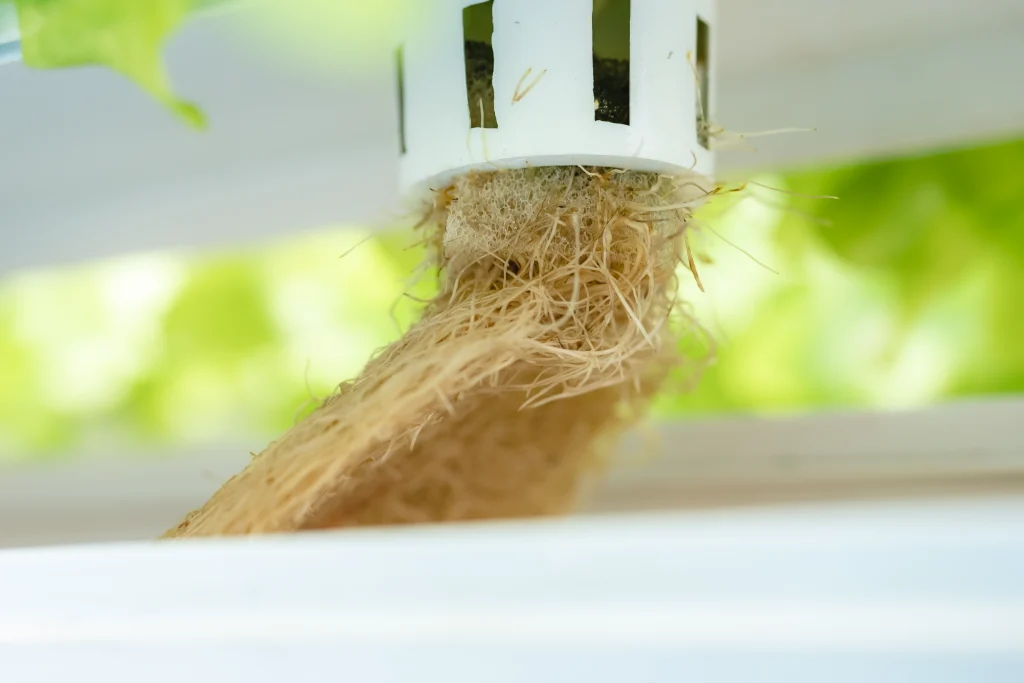
FROM RESERVOIR TO ROOT
The water route determines where an application ends up
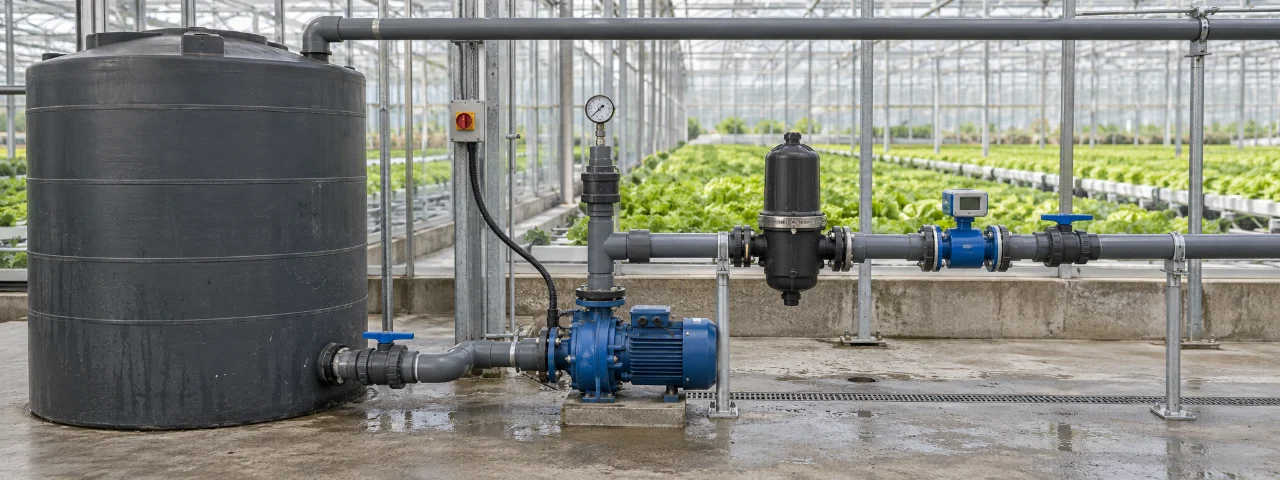
Reservoir
Water and nutrients come together here, where the technical water route begins.
Water and nutrients come together here. The quality and residence time of the water form the starting point of the route.
Circulation
Pumps, pipework, flow rate and oxygen determine the conditions along the way.
Pumps and pipework move the nutrient solution. Flow rate, oxygen supply and throughflow determine the conditions along the way.
Root zone
This is where the nutrient solution, the roots and the microbial application meet.
At the root, water, nutrition and the microbial application come together. This is where the growing system and the biological application meet.
Return water
With recirculation, water returns from the root zone into the system.
In recirculating systems part of the solution returns. Changes from the root zone then re-enter the system.
CHOOSING THE RIGHT ROUTE
Start with the system, then look at the application
Start at the point in the system where support is needed. From there it becomes clear which application belongs with it.
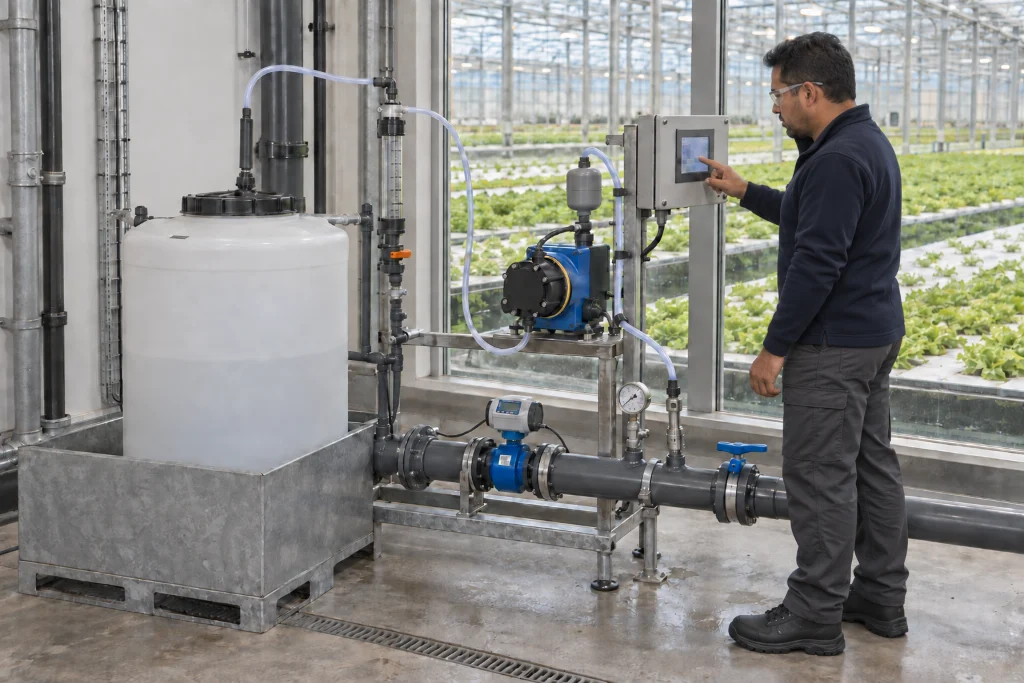
The origin, composition and storage time of the water form the starting situation, together with the pH, conductivity and temperature of the nutrient solution. UV, oxidative treatment, heating or filtration also determine where living microorganisms can be added.
Even throughflow and an appropriate oxygen supply determine the conditions around the root. Flow rate and circulation time also determine how quickly an application reaches the root zone.
The dosing point should sit logically in relation to the reservoir, water treatment, circulation and root zone. Dosing just before a step that inactivates microorganisms is therefore not an obvious choice.
With recirculation, water returns from the root zone to the reservoir. Application and water treatment are then assessed as one continuous route, including in a flowing system, floating cultivation or separate plant positions.
TARGETED APPLICATION
Three different routes within one water system
The distinction lies mainly in the part of the water route the application is aimed at.
Root zone
Via the nutrient solution to the root zone
Application via the nutrient solution, matched to circulation and water treatment.
Microbial formulation for application via the nutrient solution, aimed at the root environment in water-based growing systems. Dosing is matched to circulation, water treatment and the moment the solution reaches the roots.
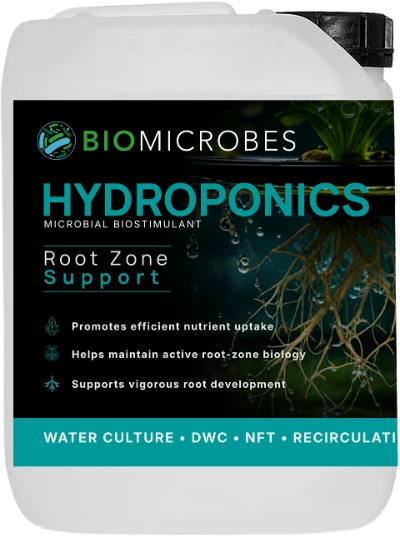
Reservoir and recirculation
In stored and recirculating water
Microbial support for stored and recirculating irrigation water.
For regular microbial support of stored and recirculating irrigation water, before or while it circulates through the system.

Lines and emitters
In drip lines and around emitters
For systems in which drip lines are genuinely part of the water route.
For regular microbial support in drip lines and around emitters. This route applies only when drip lines are genuinely part of the growing system.

COMPOSITION AND APPLICATION
Living microorganisms require a considered application
First map the complete water route, then determine the right application point.
Living microorganisms must be added to the system at the right place and the right moment. First map the water route (storage, treatment, mixing, circulation and the path to the root) and match the application to it.
- 01Determine which part of the system you want to support.
- 02Check which filtration and water treatment are in use.
- 03Do not dose directly before a step that inactivates microorganisms.
- 04Allow for circulation time and the route to the root.
Do you grow in rock wool, coco coir or peat?
See how substrate type, slab volume and irrigation influence the application.
View Greenhouse and substrate →PRACTICAL QUESTIONS
Frequently asked questions about water-based growing
Recognize your system and find the right BIOMICROBES solution.
Is microbial support worthwhile when my fertilizers are already fully dissolved?
Research on releasing fixed phosphate from soil cannot be applied directly to a nutrient solution in which phosphate is already available. Other interactions between roots and microorganisms may be relevant, but they must suit the product and the system. So assess which effect you are aiming for and measure it in your crop. “Better uptake” does not automatically mean the fertilizer concentration can be reduced.
What can microorganisms do for root development, nutrients and vitality, beyond water-based growing too?
Why microbiology?