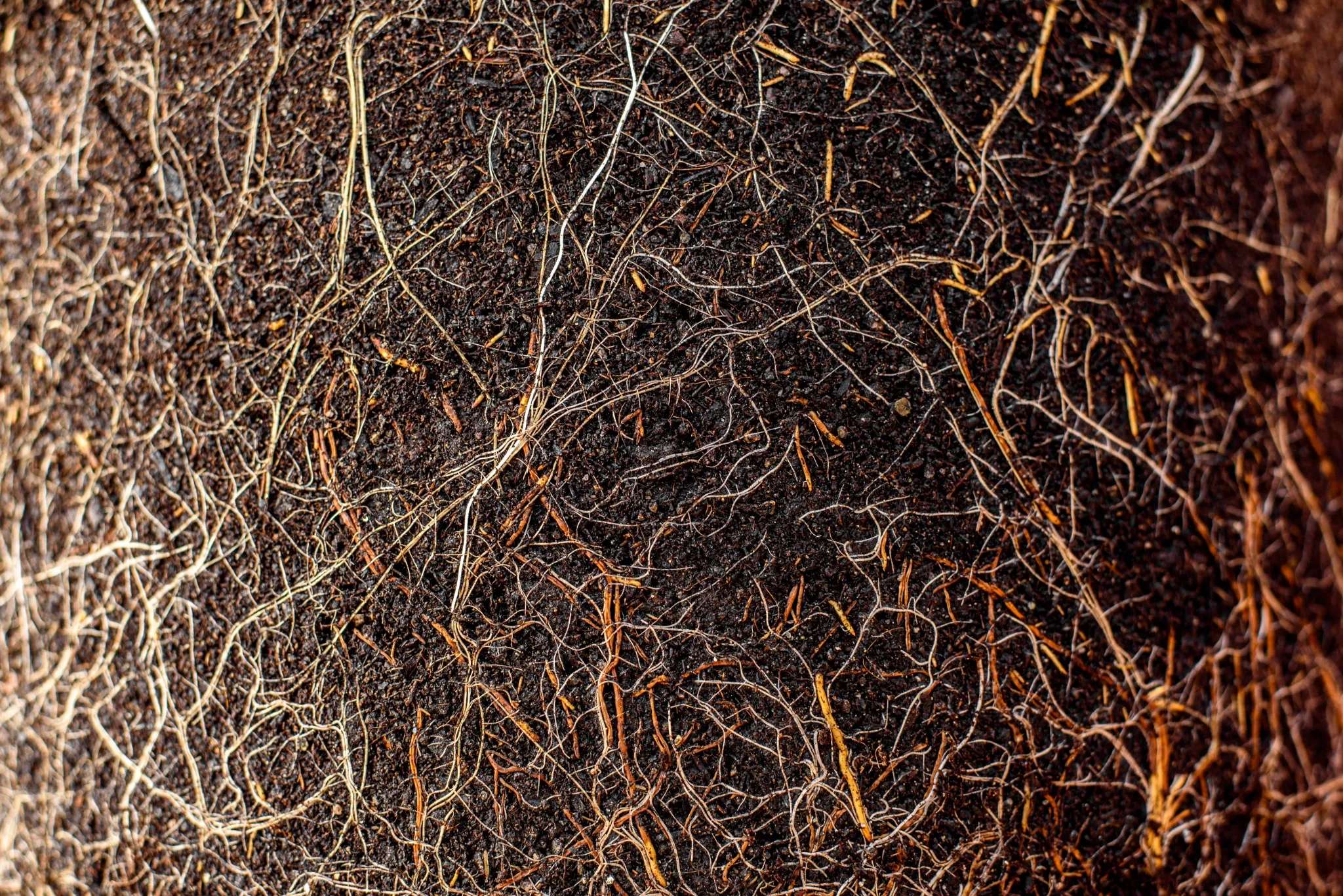
A crop can only perform well when the environment around its roots is in good shape. Water, oxygen, nutrition, pH and root temperature all play an important part. But that same root zone is also home to microorganisms that can influence the processes around the root.
That is why bacteria from the genus Bacillus are increasingly applied in a targeted way in professional growing systems. Not because every Bacillus bacterium automatically has a positive effect, but because carefully selected strains can have useful properties. Understanding Bacillus in the root zone starts with that distinction.
The result, however, isn’t determined only by the bacterium in the package. The chosen strain, formulation, rate, storage conditions and application method must suit the crop and the growing system. And after application, the microorganism has to actually reach the root zone and become active under the conditions it finds there.
Bacillus is not one single bacterium
Bacillus is often talked about as if it were one bacterium with one fixed effect. In reality, it is a large genus with many species and an even larger number of strains.
A strain is a specific variant within a species. Many properties are determined at exactly that level. Two strains with the same species name can behave differently in the root zone, produce different compounds and become active under different conditions.
It’s comparable to crop varieties. Two tomato varieties are both tomatoes, yet they can differ widely in growth, yield, susceptibility and suitability for a particular growing system. The same applies to microorganisms: the genus name alone doesn’t tell you what a strain can do in practice.
So “it contains Bacillus” is not, on its own, a good basis for judging a product. More important questions are:
- Which strains does the product contain?
- Why were these particular strains selected?
- Are they stable enough in the formulation?
- What application is the product intended for?
- Under which conditions can the strains become active?
- How should the product be stored and applied?
Why Bacillus is interesting for microbial products
An important property of several Bacillus strains is that they can form endospores. A spore is a dormant form that allows the bacterium to survive less favorable conditions.
That is valuable when producing, storing and applying a microbial formulation. Microorganisms are, after all, living organisms. They need to survive the period between production and use without losing their viability.
Spore formation can help. It generally makes certain Bacillus strains more resistant to drying out and temporary environmental stress than bacteria that don’t form spores.
Still, there is an important difference between surviving and functioning. A spore that has survived in the package still has to, after application:
- end up in the root zone;
- germinate under the conditions present;
- adapt to its environment;
- make contact with the root surface or its immediate surroundings;
- become active enough to make a relevant contribution.
Spore formation is therefore a practical advantage, but not a full explanation of how a product works.
Where the interaction with the plant takes place
The soil, substrate or water directly around the roots is called the rhizosphere: the narrow zone where roots, microorganisms, nutrients, organic compounds, water and oxygen all influence each other.
Roots release sugars, amino acids and other compounds. These root exudates are a food source for certain microorganisms. At the same time, microorganisms can produce compounds or carry out conversions that affect the immediate root environment.

The root surface itself is called the rhizoplane. Some bacterial strains can settle there temporarily or for longer. Others are found mainly in the material just around the root.
That colonization doesn’t happen automatically. The root zone is not an empty space where an added microorganism has free rein. There is already an existing microbial community, and moisture, temperature, nutrition, pH and oxygen change all the time.
A selected strain has to be able to hold its own within that reality. That is why laboratory results alone are not enough. Formulation and application under practical conditions count as well.
Supporting nutrient processes
Plants can only take up nutrients when these are present in an available form and in the right place around the root. In soil and substrate, nutrients can be temporarily tied up, chemically bound or become part of organic matter.
Certain Bacillus strains can produce enzymes, organic acids or other metabolites that play a role in conversion processes in the root zone. Research describes effects on, among other things, the dynamics of phosphate and certain trace elements.
That doesn’t mean a bacterium replaces fertilizers or can release nutrients without limit. The available supply, pH, moisture, oxygen supply and chemical composition of the root environment remain decisive.
A microbial application should therefore be seen as part of the overall crop program. Fertilization, irrigation and root zone management remain essential. Selected microorganisms can support these processes, but they don’t correct a fundamentally wrong feeding schedule.
So the practical question is not: “Can this bacterium make nutrients?” The better question is:
Can this strain, under the conditions of my crop, help processes around the available nutrients and the root run more favorably?
Root development and a more uniform crop
The root is the link between the plant and its growing environment. The size, branching and activity of the root system determine how much water and nutrients a plant can reach.
Certain Bacillus strains are known to produce compounds involved in the interaction with plants and roots. Research describes, among other things, changes in root branching and root development.
Here too, the final result depends on the strain and the growing conditions. A bacterium cannot guarantee a healthy root system when the root zone is structurally too wet, low in oxygen, too cold or chemically out of balance.
The commercial value of a targeted microbial application lies mainly in its ability to support root zone management. When the application fits the crop well, it can contribute to a more active root environment and a more uniform crop.
“More roots” is not always the only or best measure. Root color, branching, distribution and activity matter too.
Support under stressful conditions
In practice, crops regularly face abiotic stress. Think of:
- high or low root temperatures;
- fluctuations in moisture;
- increased salt load;
- temporary lack of oxygen;
- large changes in light or evaporation;
- variation in the composition of the nutrient solution.
Scientific research (opens in a new tab) has described Bacillus strains that can influence processes linked to how plants respond to such conditions, for example changes in signaling compounds, antioxidant processes and root development.
That doesn’t mean a microbial application prevents stress. A plant without enough water will still suffer from drought, and a root zone low in oxygen needs a technical fix.
A suitable microbial application can, however, be part of a broader program aimed at helping the crop and root zone function better when conditions change.
Exact claims must always match the strain studied, the product concerned and its registration in the market where it is used.
Why strain selection matters more than a long ingredient list
A product with many different microorganisms is not automatically better than one with a limited number of carefully chosen strains.
Strains in a formulation need to be more than interesting on their own. They also have to:
- remain stable alongside each other;
- suit the chosen carrier and formulation;
- be able to become active in the intended root environment;
- not work against each other unnecessarily;
- reach the application alive and in sufficient numbers.
That is why a long list of species says little when it isn’t clear why the organisms were selected and how the product should be used.
At BIOMICROBES, we prefer to look at the function of the selected strains and their place in the growing system. The aim is not to put as many names as possible on a label, but to make a microbial solution technically workable.