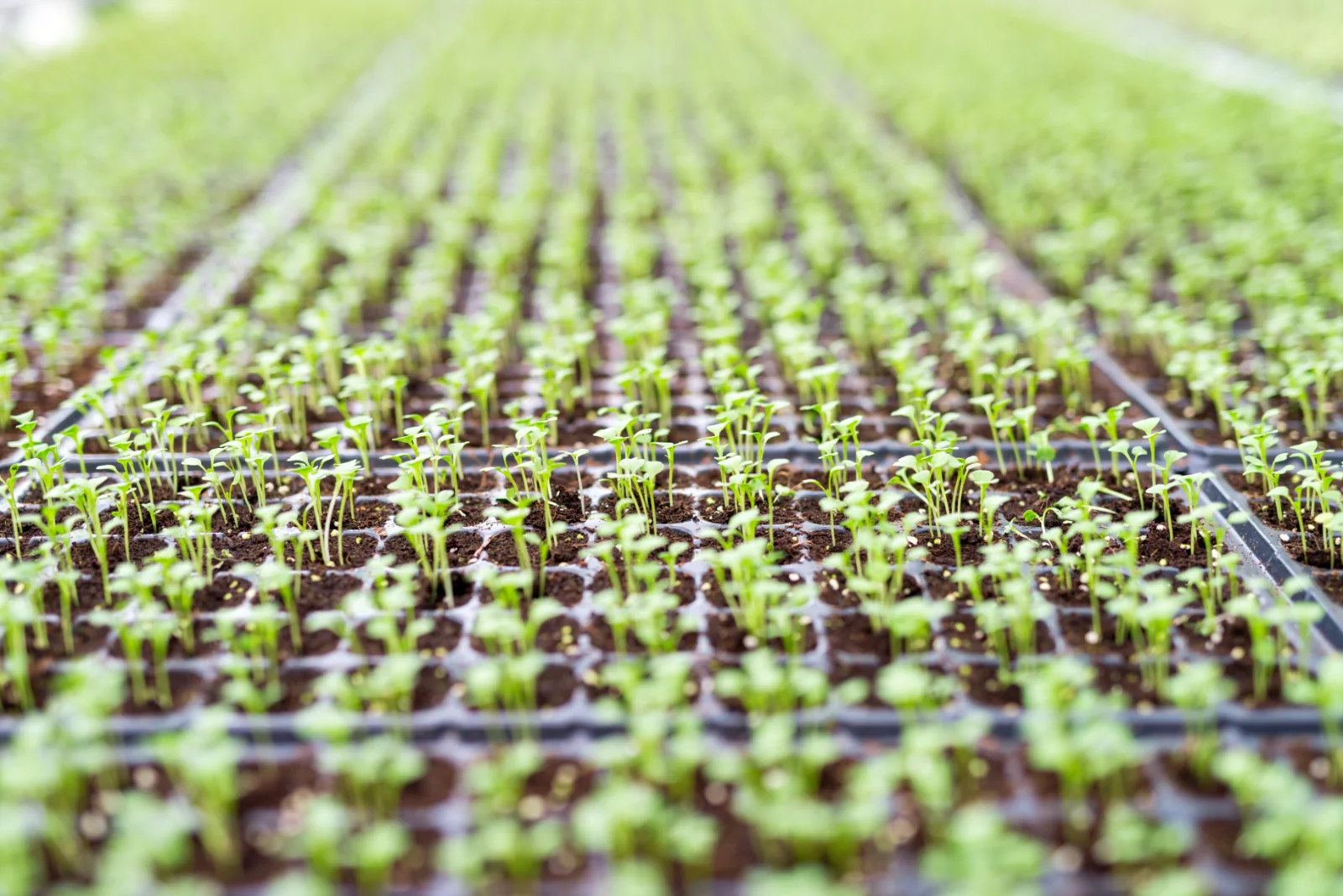
The old crop is out. Lines have been checked, gutters cleaned and the new substrate is ready. For the young plants, a decisive phase begins: new roots grow out, and the microbial community around those roots starts to build up.
Microorganisms arrive by themselves with plant material, irrigation water, substrate and the surroundings. But their presence alone says nothing about their properties or what they contribute to the crop. Microbiology that happens to be there is not the same as a targeted application of selected strains.
That is exactly why crop changeover is a strong moment to introduce selected microorganisms early into the root zone. Not as a stand-alone extra, but as a deliberate part of the crop program. That way, you don’t leave what happens around young roots entirely to chance.
Crop changeover changes more than just the crop
At crop changeover, many things change at once. The old root system disappears, organic matter is removed and lines or gutters are cleaned. Sometimes all the substrate is replaced; in other systems part of it is reused. Irrigation, the feeding strategy, temperature and the load on the irrigation system all build up again.
For the microbiology, that is a major transition. The environment around the old roots disappears and a new root zone forms. At the same time, microorganisms enter the system again from several sources, such as:
- the propagation block, plug or starter cube of the young plant;
- coir, peat, stone wool or another growing medium;
- irrigation water, drain water and storage tanks;
- fertilizers, organic matter and dust from the surroundings;
- surfaces that become wet again after cleaning;
- people, materials and work in the greenhouse.
So this microbiology develops either way. The difference lies in whether you leave its build-up entirely to whatever comes in by itself, or give selected microorganisms a place from the very beginning.
Microbes being present is not the same as targeted microbiology
Fresh substrate is not always microbiologically empty. The starting situation varies widely depending on the material, how it is produced, stored and used. That, however, is no reason to leave out microbial support.
Organic substrates such as coir and peat can already contain a wide range of microorganisms. Mineral growing media are also colonized after processing, transport, wetting and use. Plant material and irrigation water bring in microorganisms as well. Research on a peat-perlite mix (opens in a new tab), for example, found a bacterial community even in unplanted substrate, which then changed during cultivation under the influence of fertilization, pH, cultivar and the plant itself. Read more about the root zone in greenhouse and substrate cultivation.
The key is the difference between presence and purpose. The microorganisms that happen to be in plant material, water or substrate have not been selected for any intended function in the growing system. With a well-chosen microbial product, the grower introduces known, selected strains at a deliberately chosen moment. That gives more direction than leaving the build-up of the root zone solely to whatever enters by itself.
What happens around a young root?
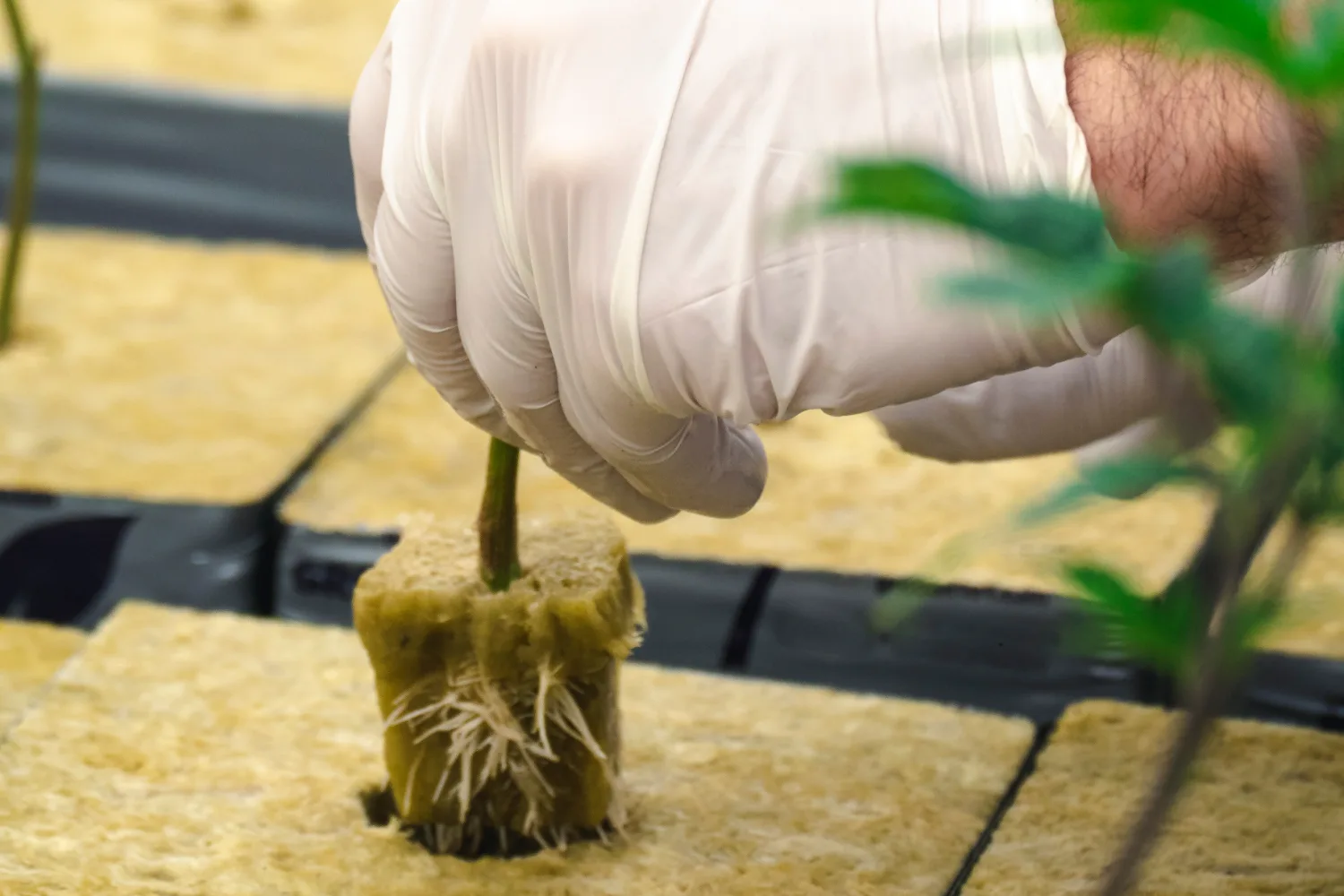
The narrow zone directly around a root is called the rhizosphere. Roots release a range of compounds there, including sugars, amino acids and organic acids. Together with moisture, oxygen, pH and available nutrients, these root exudates create an environment in which some microorganisms thrive better than others.
The plant is not a passive bystander. Age, crop, cultivar and growth stage all influence which microorganisms can settle on and in the root. At the same time, conditions are shaped by the growing system: a young plant in stone wool with frequent irrigation has a different root environment than a plant in coir, peat or open field soil. See also the different growing systems.
The microbial community therefore results from the interplay of:
- the plant, with its root growth and root exudates;
- the environment, including substrate, water, temperature, oxygen and fertilization;
- the microorganisms present, coming from several sources;
- crop management, such as hygiene, recirculation, disinfection and irrigation strategy.
That is why an application delivers the most when the choice of strains, timing and method is matched to the crop and the growing system.
Why crop changeover is a strong starting point
In the first phase of a crop, many new root tips form and the root system grows quickly through the substrate. That creates a lot of new root surface and makes the early phase decisive for how the microbial community builds up.
Experimental research with Setaria viridis (opens in a new tab) showed that the moment at which roots were exposed to microbial communities could influence the later composition of the root microbiota.
Applying early gives selected microorganisms access to the root environment at the moment a lot of new root surface is forming. After that, the root zone keeps changing with root growth, irrigation, fertigation, temperature and crop development. That is why the application should not stand alone, but be part of a program that fits the crop and the system.
Crop changeover is no guarantee of a fixed microbiome for the whole season. But it is a logical and easy-to-manage moment to start a well-thought-out microbial strategy.
What selected microorganisms need to do their job
A targeted application takes more than the product alone. The selected strains need to reach the root zone and find conditions there in which they can be active. The right timing, compatibility with water treatment and application according to the current label are therefore essential to a professional program.
Important factors include:
- the selected strains and the product;
- application according to the current label and product-specific guidelines;
- the crop and its growth stage;
- the properties of the substrate;
- pH, temperature, moisture and oxygen in the root zone;
- the composition of the nutrient solution;
- the timing of disinfection or treatment with strong oxidizers.
A well-functioning irrigation system, a suitable feeding schedule and careful hygiene form the foundation. They don’t make microbial support unnecessary; they help apply selected microorganisms under the right conditions.
Five conditions for a strong microbial start
1. A clear goal
Decide what you want to achieve with the application, for example making microbiology a deliberate part of root zone management from the start. A clear goal makes it easier to set up the program and follow its effect.
2. Insight into the starting situation
Note which substrate is used, how it was stored and whether it is new or reused. Also look at the condition of the young plants and the root medium they come in. That tells you what environment the selected microorganisms will enter.
3. A matched water line
Map the source water, storage, recirculation, filtration and any disinfection. Plan the application so the microorganisms are not applied shortly before or together with an incompatible treatment. Always check the current product information and the full water line. Read more about water microbiology.
4. A fit with the crop plan
Fertigation, pH, irrigation frequency, drain strategy and temperature all shape the root environment. Match the application to them, so microbial support becomes a fixed and logical part of the program.
5. A way of monitoring chosen in advance
Decide beforehand which observations matter. Think of root system development and distribution, crop uniformity, crop records and changes in the root environment. Where practical, work with a comparison section and record conditions and applications.
What a microbial biostimulant is, and what it is not
Under EU regulations (opens in a new tab), a plant biostimulant is intended to stimulate plant nutrition processes independently of the product’s own nutrient content. The permitted aims relate to nutrient use efficiency, tolerance to abiotic stress, quality traits, or the availability of confined nutrients in the soil or rhizosphere.
A microbial biostimulant consists of one or more microorganisms. That makes it different from a fertilizer that simply supplies missing nutrients. It is not a plant protection product either, and it must not be presented as a treatment against diseases or pathogens unless the product is authorized for that.
Which effects may be stated for a specific product depends on its registration, the market, current product documentation and supporting evidence. General knowledge about a bacterial species is therefore not automatically a permitted claim for every product that contains it.
Make microbial support part of your crop program
A microbial application works best as a fixed part of the program, not as a one-off intervention. Rate, frequency and compatibility always follow the current label, the product-specific guidelines and technical advice for the market, crop and growing method concerned.
When setting up the program, factors include:
- crop and growth stage;
- substrate or soil;
- water source and recirculation;
- irrigation technique and residence time;
- fertilizers and other tank-mix partners;
- disinfection and maintenance products;
- temperature and storage conditions;
- locally applicable product authorization and directions for use.
Make root zone development visible
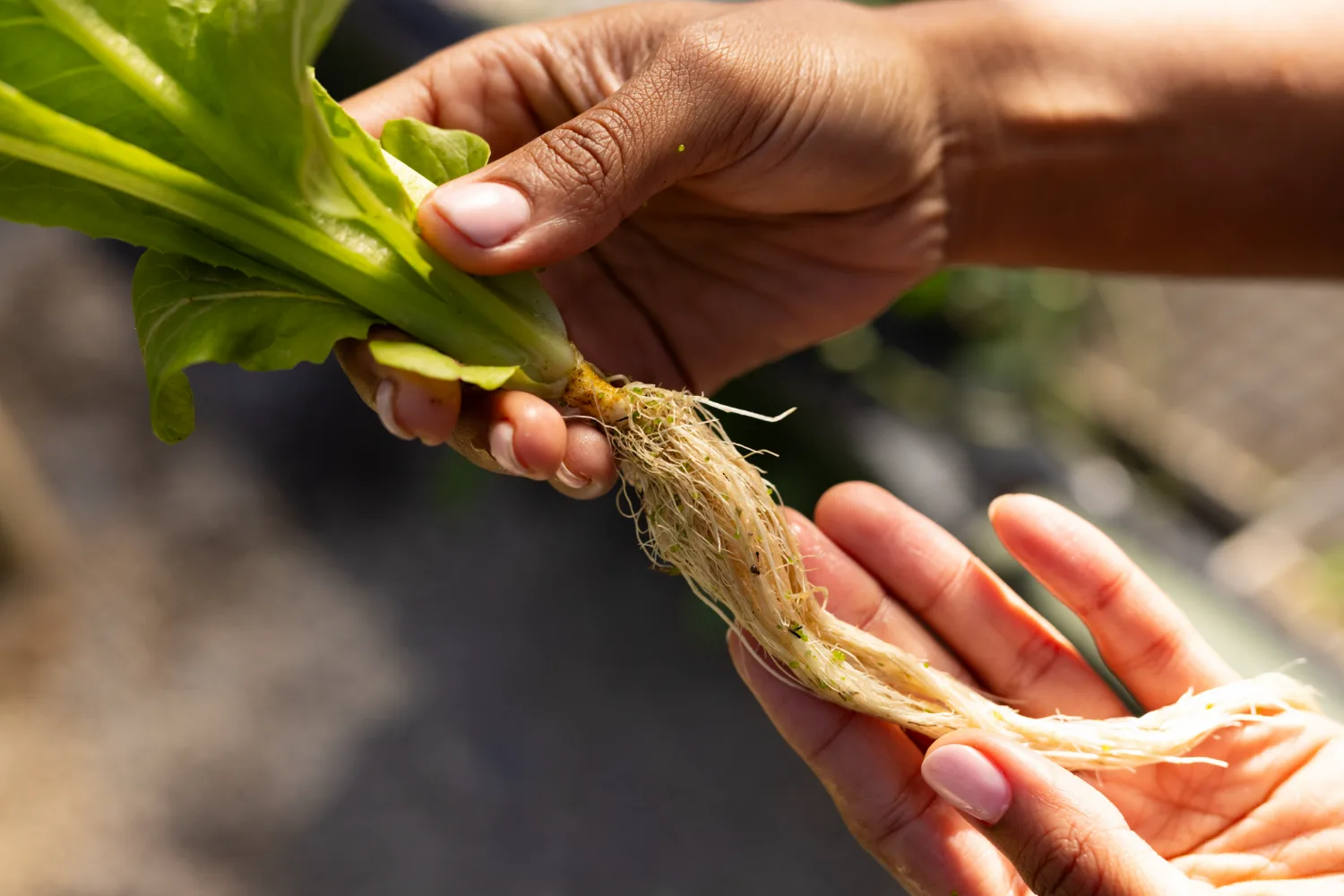
If you use microbial support deliberately, you also want to see how the root zone develops. A single white root says little: young roots are often naturally light in color, and irrigation, oxygen, temperature and crop stage all affect how roots look. A better assessment combines several observations over time, for example:
- root system development at different places in the substrate;
- differences between plants, sections and irrigation lines;
- the relationship with irrigation, drain, EC, pH and substrate temperature;
- changes after adjustments to the growing or irrigation schedule;
- a comparison chosen in advance, where the practical situation allows.
This shows how the application works within the overall growing system, so the program can be fine-tuned where needed.